In modern American life, acquiring more often feels normal. A crowded garage, overflowing closets, rented storage units, constant online shopping, and the pursuit of the latest upgrades are rarely viewed as spiritual concerns. In fact, our culture frequently celebrates accumulation as a sign of success. Yet Scripture consistently calls God’s people to examine not only how they earn and spend money, but also how their possessions influence their hearts.
As stewardship leaders, we regularly encourage faithfulness in returning tithe, supporting the mission through offerings, and wisely managing the resources God has entrusted to His people. Yet there is another stewardship challenge that deserves our attention: the growing accumulation of possessions and the subtle pull of consumerism. What may appear to be a practical matter of ownership and storage can, over time, become a spiritual issue that shapes priorities, contentment, and trust in God.
The Bible speaks directly to this concern. Jesus warned, “Take heed and beware of covetousness, for one’s life does not consist in the abundance of the things he possesses” (Luke 12:15). He later illustrated this truth through the parable of the rich fool, a man whose focus was on building larger barns to store his growing wealth rather than seeking God’s kingdom. The Lord’s assessment was clear: “So is he who lays up treasure for himself, and is not rich toward God” (Luke 12:21).
Many church members are also familiar with Paul’s warning in 1 Timothy 6:10: “For the love of money is a root of all kinds of evil.” They have heard Jesus’ sobering words in the Parable of the Sower, where He explains that the seed falling among thorns represents those who hear the Word but allow it to be choked by “cares, riches, and pleasures of life” (Luke 8:14). Together, these passages remind us that stewardship is not merely about managing finances—it is about guarding the heart and ensuring that material things never crowd out our devotion to Christ.
This challenge is not simply about clutter, storage, or organization. It is ultimately about discipleship. Every possession requires some measure of our time, attention, energy, and concern. The more we accumulate, the easier it becomes for material things to compete with our devotion to Christ. As Jesus taught, “For where your treasure is, there your heart will be also” (Matthew 6:21). The stewardship question is not merely how much we own, but whether what we own is drawing us closer to God or distracting us from His purposes.
Julian Archer wrote a book that is very relevant to today’s culture: HELP! I’ve Been Blessed!
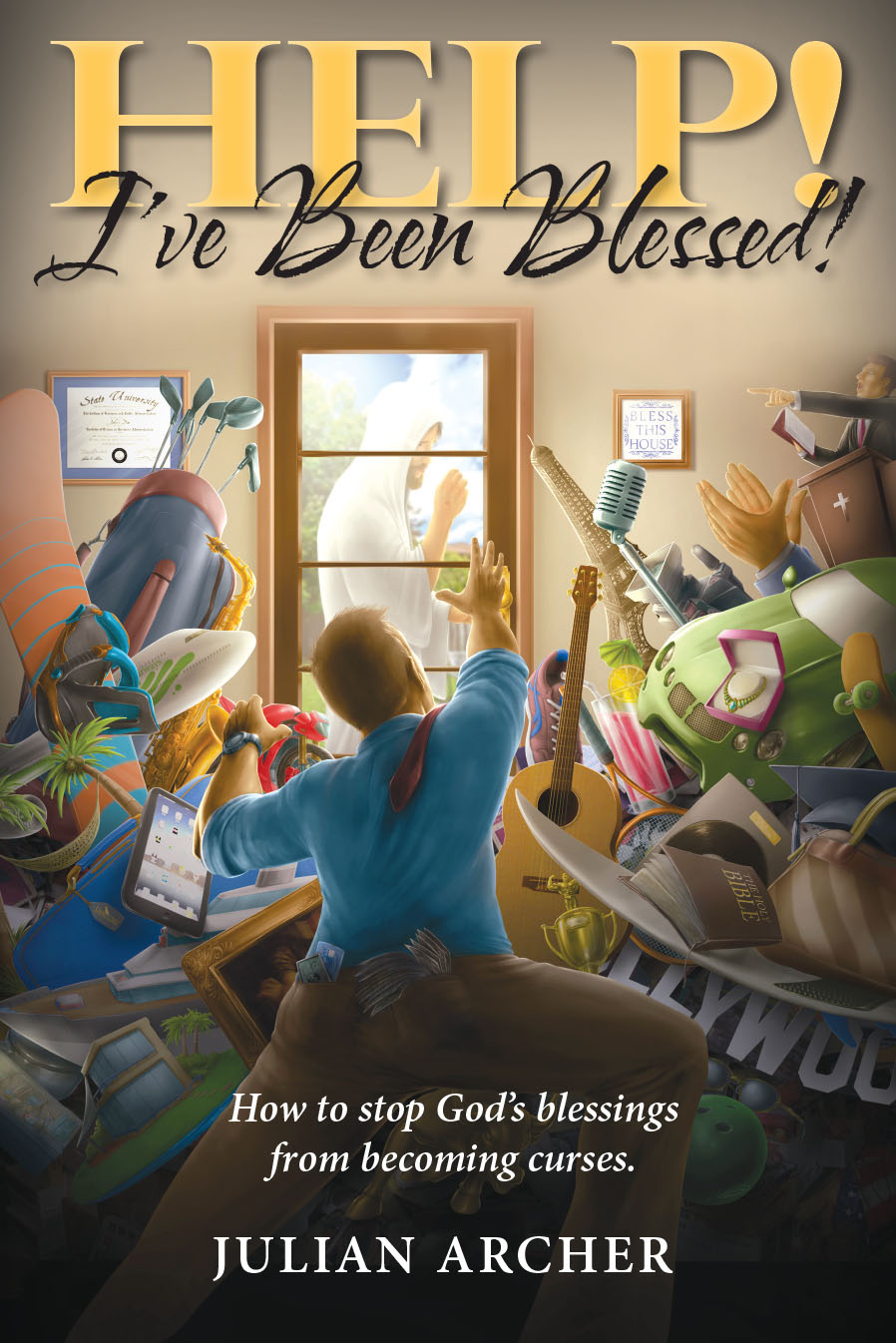
The cover has a picture of Jesus is knocking at our heart’s door, but we can’t even reach the door handle because of all the blessings we’ve piled up inside.
In today’s affluent world it’s Faith vs Finance, and nowhere is the battle more intense than deep inside our hearts. Mahatma Gandhi said, “The fact is, the moment financial stability is assured, spiritual bankruptcy is also assured.”
The Bible repeatedly calls believers to a life of simplicity and faithful stewardship. Paul encouraged Christians to find contentment in God’s provision: “Having food and clothing, with these we shall be content” (1 Timothy 6:8). Likewise, the writer of Hebrews reminds us, “Let your conduct be without covetousness; be content with such things as you have. For He Himself has said, ‘I will never leave you nor forsake you’” (Hebrews 13:5).
For Seventh-day Adventists, this message aligns closely with our understanding of stewardship as a lifestyle. We recognize that everything belongs to God (Psalm 24:1), and that we are managers—not owners—of His gifts. Faithful stewardship extends beyond financial giving; it includes how we use our homes, our possessions, our time, and our influence to advance God’s kingdom.
As stewardship leaders, by guiding church members toward greater simplicity, contentment, and generosity, we help them experience the freedom that comes from trusting God fully. In a world that constantly urges people to acquire more, the church can point believers to Christ’s invitation to seek first His kingdom (Matthew 6:33) and discover the joy of living with eternal priorities.
By Rudy Salazar